



About the College of Chemistry
Greeting from the dean
Professor
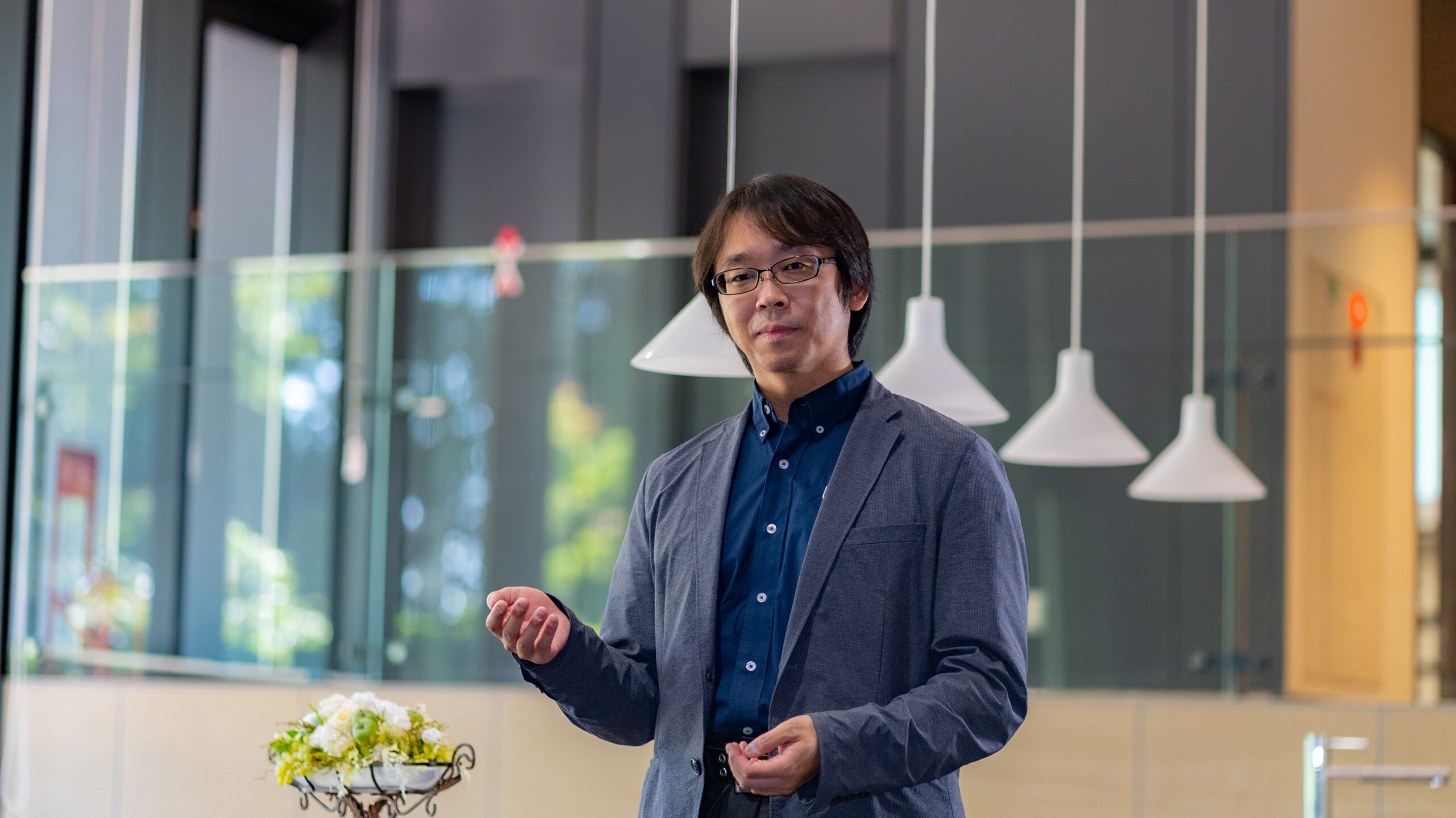
Welcome to the College of Chemistry
Our daily lives are built upon "molecules." Medicines that cure diseases, organic light-emitting diode (OLED) displays in smartphones, lightweight yet strong carbon fiber structural materials—all of these have been brought into existence by chemists who understood the properties of molecules and designed and synthesized new ones. Why do molecules possess such properties? How can we create molecules with the properties we desire? Chemistry is the discipline that continues to take on these fundamental questions. The greatest strength of chemistry lies not only in understanding matter but also in the ability to create it. Even molecules that do not exist in nature can be brought into being by precisely controlling the bonds between atoms. Once a new molecule is born, it holds the potential to become a new material, a new medicine, or a new energy source. Chemistry is at once a fundamental science that deepens our understanding of the laws of nature and a creative discipline that opens the way to humanity's future.
When studying chemistry in high school, you may have wondered, "Why does this reaction proceed?" or "Why does this molecule have this particular shape?" University-level chemistry answers these questions by unraveling each "why" at the atomic and molecular level. At the College of Chemistry in the School of Science and Engineering at the University of Tsukuba, students can systematically study a broad range of chemistry, centered on three core fields—organic chemistry, inorganic and analytical chemistry, and physical chemistry—along with their interdisciplinary areas. In the third year, roughly half of each week is devoted to laboratory courses, where students gain hands-on experience verifying chemical principles for themselves.
In the fourth year, students are assigned to research laboratories and begin the journey of "research"—tackling questions to which no one yet knows the answers. Located in Tsukuba Science City, our university offers a world-class research environment with strong ties to the surrounding research institutions. Armed with the knowledge gained through lectures and textbooks, students venture into uncharted territory with their own hands—this is the true thrill of research.
A wide variety of career paths await those who have studied chemistry. In addition to pursuing further research through graduate studies, graduates can apply their chemical knowledge and analytical thinking in remarkably diverse fields, including chemical manufacturers, pharmaceutical companies, electronics companies, public research institutions, and education.
Chemistry is a discipline that becomes more fascinating the more you learn. When one question is answered, a new mystery emerges beyond it. Within that chain of discovery, there is surely a finding that is uniquely yours. We invite you to experience the excitement of chemistry with us at the College of Chemistry, University of Tsukuba. We look forward to meeting you.
Code of Ethics on Education
Curriculum
In the College of Chemistry, faculty members put great effort into leading and educating students to improve their fundamental academic achievement and become international researchers. We train our students to acquire the broad and fundamental knowledge of chemistry—which is necessary to explore the universal laws of nature and unknown substances and phenomena—to create functional materials and develop new materials, solve environmental and energy problems, and elucidate biological phenomena at the molecular level. The program also aims to develop individuals with flexible thinking skills and the ability to work on a global scale, backed by this knowledge and understanding.
To cultivate a professional and working knowledge of chemistry over four years, we organize and implement a curriculum that builds upon the basics. The curriculum includes the core courses of lectures and experiments along with practical training courses and graduation theses for students to actively engage in learning and develop comprehensive skills in chemistry. In experiment classes, students are comprehensively evaluated for their achievements through reports, attitudes towards experiments, and performance in question-and-answer sessions.
- In the College of Chemistry, first-year students study common courses designed for all students at the University of Tsukuba and required basic courses designed for students of science majors. Second-year students study specialized courses, such as Inorganic Chemistry, Analytical Chemistry, Physical Chemistry, Quantum Chemistry, and Biological Chemistry, together with the Basic Experiments of Chemistry. Third-year students study specialized subjects for a deeper understanding of the chemical fields in which they are interested.
- In their third year, students spend more time on experiments. Experiments in Inorganic/Analytical Chemistry, Physical Chemistry, and Organic Chemistry are compulsory subjects, and these will take up three afternoons per week, training students in the experimental skills required for research. Second- and third-year students read technical books on basic and specialized chemistry written in English in the courses of Basic English in Chemistry and English in Chemistry, respectively. This helps prepare them for graduate research, which will require English academic reading.
- Fourth-year students mainly concentrate on their graduate research. The students are assigned to the laboratory and carry out their graduate research in an active atmosphere under a professor's leadership while maintaining close contact with faculty staff, graduate students, and researchers from Japanese and overseas institutions.
- Most graduates from the College of Chemistry go on to graduate school to enhance their research capability. After that, they work for universities, national research institutes, or the chemical industry, engaging in basic research and the development of advanced technology.

In addition, one of the distinctive features of the College of Chemistry is that we have plenty of time for experiments in the third year. Three afternoons a week are devoted to specialized experimental training in chemistry that allows students to acquire a broad range of laboratory techniques in various fields of chemistry, including organic chemistry, inorganic chemistry, physical chemistry, and analytical chemistry.
- Each year, students voluntarily complete a class evaluation survey. We also conduct a university-sponsored survey. The results of these surveys and various issues related to the management of the school are discussed at the "Student-Faculty Roundtable," where students and faculty members meet. The results are made available to the public in the form of a report every year.
- The faculty members in charge of each course individually conduct questionnaires to help improve the effectiveness of education.
- Based on the questionnaires, we review the educational content and course linkages in each of the chemistry fields from time to time. In addition, we discuss in the Curriculum Committee to strengthen the linkages between each field.
- The results of the final exams and reports are comprehensively evaluated, and rigorous credit approval is carried out.
If you meet the requirements, you will be able to join the College of Chemistry from your second year.
For more information, please see the website of the School of Comprehensive Studies.
Degree Conferral Policy
The College of Chemistry confers the degree of Bachelor of Science on students who have acquired the knowledge and abilities required for achieving the educational goals of the University of Tsukuba’s Bachelor’s program and those who have attained the following goals, in accordance with the human resource development objectives of the University of Tsukuba.
- The acquisition of basic knowledge of the natural sciences and scientific ways of thinking.
- Understanding materials at the molecular, atomic, electronic, and chemical bonding levels.
- The acquisition of basic chemical knowledge on universal laws of nature, unknown substances and phenomena, creation of functional materials and development of materials, finding solutions to environmental and energy problems, and clarification of biological phenomena.
- Acquisition of flexible thinking skills and the ability to work internationally based on this knowledge and understanding.
- Ability to work cooperatively with others to solve chemistry-related problems.
Information materials of the College of Chemistry
Introduction by current students
Message
-
My Interest in Chemistry ExpandedYumena Izukura (Enrollment for 2021)
In the Department of Chemistry, the University of Tsukuba, students learn about various fields of chemistry, including organic chemistry, inorganic chemistry, and physical chemistry. Students can also learn the essential theories of things that were simply memorized in high school. In the experimental programs, you will be able to experience the fun of chemistry since you synthesize and measure compounds by yourself using the well-equipped facilities. I myself used to be not good at chemistry in high school, but I became interested in it and came to love it through in-depth study at the university. I hope you will enjoy a fulfilling life in chemistry at the Department of Chemistry, the University of Tsukuba!
-
Dive Deeply into ChemistryShugo Tasaki (Enrollment for 2021)
In the Department of Chemistry, the University of Tsukuba, you can acquire specialized knowledge on physical chemistry, inorganic chemistry, and organic chemistry under the guidance of leading professors at the research forefront. You can also broaden your knowledge by learning about the interrelated roles they play in real life through examples such as materials and medicines. You will also be able to apply your knowledge in a rich program of experiments and hone your practical skills in cooperation with your peers. Come and join us here at the Department of Chemistry, the University of Tsukuba. You can learn as much as you want about chemistry.